Organic Mattress Materials
Cotton Layers, Latex Cores: Assessing Naturepedic Bed Construction
An organic mattress is not a single material story. Cotton may form the cover or add cushioning; latex, springs, or another core determine much of the bed’s support. To assess a Naturepedic mattress—or any organic mattress—look beyond the label and trace how its layers work together.
The word “organic” has a reassuring simplicity. Mattress construction does not. A bed can combine several fibers and support materials, each with its own job, feel, care requirements, and certification status. The cover touches the sleeper. Comfort layers shape the first impression. The support core carries most of the load and influences how deeply the body settles. A description that says only “organic cotton and latex” leaves the most useful questions unanswered: where is each material, how thick is it, and what does the whole assembly do?
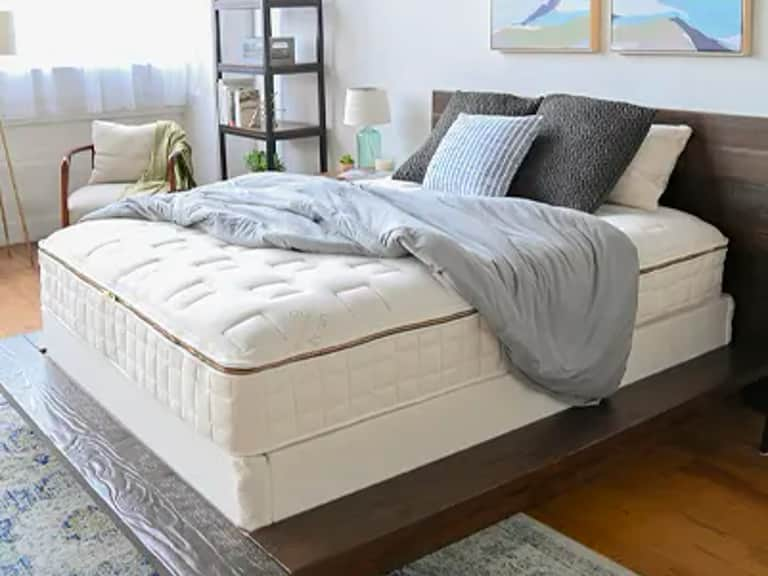
Naturepedic offers a helpful reference point because its EOS Classic is described as a layered, customizable mattress, with organic cotton and wool among its materials, organic Dunlop latex, and pocketed springs. The product information identifies an 8-inch support layer and a 3-inch comfort layer, with different firmness configurations available. Those details make it easier to discuss construction as a system, rather than treating “natural” or “organic” as a substitute for an explanation of feel and function.
This is not a claim that one construction suits everyone. It is a way to read mattress descriptions more carefully: identify the layer, understand its role, check how the materials are verified, and compare the result with your own sleep preferences.
Start with the layer, not the adjective
Mattress marketing often groups materials together in a short headline. But cotton in a cover is not the same thing as cotton used as thick internal padding, and neither performs the same role as a latex core. Material names tell only part of the story. Position, quantity, construction, and the materials beside them matter too.
A useful first step is to map the bed from top to bottom. The outer cover may be woven or knitted cotton. Beneath it may sit a quilted or padded layer, sometimes containing cotton, wool, or another fiber. Below that are the comfort and support components: latex, springs, or both, depending on the design. A mattress may also have an internal barrier or fire-resistant component. A transparent product description should make this architecture understandable without requiring a shopper to guess.
- Cover: The fabric enclosure that provides the surface finish and contains the mattress layers.
- Quilting or padding: A relatively shallow layer that can alter softness, cushioning, and the feel of the surface.
- Comfort layer: The material closest to the sleeper’s body that shapes pressure relief and initial contouring.
- Support core: The deeper structure that carries weight and contributes to the bed’s overall stability and support.
- Assembly: The way layers are joined, enclosed, or arranged, which affects maintenance and whether components can be changed.
These categories are practical rather than universal. One manufacturer may describe a layer as “comfort,” another as “cushion,” and a third may combine functions in one component. The point is to understand what the layer does in the particular design under consideration.
What cotton contributes
Organic cotton is a plant-based fiber commonly used in mattress covers, sheets, and some forms of padding. In a cover, its role is largely about the textile surface: its weave, knit, thickness, and finishing help shape how the bed feels to the touch. A stretch-knit cover may move more readily with the layers below it, while a firmer woven fabric can feel more structured. The fiber alone does not determine softness; construction matters.
When cotton is used as padding or quilting, it can add a modest cushion and affect the surface’s initial response. Its impact depends on how much is used and how it is assembled. A thin cotton layer over a responsive core will not make the mattress behave like a deep cotton-filled futon. Conversely, a denser quilted surface may create a more noticeable first-contact feel than a taut, minimally padded cover.
Cotton’s presence does not establish that the whole bed is organic, nor does it reveal whether every component has been certified. Ask whether the description refers to the cotton fabric, the cotton batting, or both. Check whether a certification applies to a specific textile or to a broader product category, and read the current certificate or scope information when available. Terms such as “natural,” “organic,” and “eco-friendly” are not interchangeable descriptions of construction.
Care is another part of the equation. A mattress cover may not be removable or machine washable even if it is made from cotton. Mattress pads and protectors are separate products, with their own cleaning instructions. Avoid assuming that a fiber’s familiar household uses translate to easy mattress cleaning: internal materials can be damaged by excess moisture, agitation, or heat. Follow the manufacturer’s care guidance, and use a compatible protector if preserving the surface is a priority.
What latex contributes
Latex serves a different function from cotton. In mattress construction, it is often used as a comfort or support material because it compresses under load and responds as pressure changes. Its feel is commonly described as buoyant or springy, though the actual experience varies with firmness, thickness, formulation, and the layers around it. A latex layer can offer contouring without the same slow, enveloping sensation associated with some memory foams.
The word “latex” is not enough to establish origin or certification. Natural latex is derived from rubber-tree sap; synthetic latex is made from petrochemical inputs, and some products use blends. A shopper comparing organic latex mattresses should look for an explicit material description and relevant certification details, rather than infer the source from a green color palette or a broad “natural” claim. GOLS is a certification associated with organic latex products, but its presence and scope should be checked for the particular mattress or component.
Latex can appear in several positions. A relatively thin upper layer may influence pressure relief and the first impression of softness. A deeper or firmer latex layer may provide substantial support. In a hybrid design, latex works alongside a spring unit; in an all-latex bed, it may form most or all of the mattress core. Those are materially different constructions, even if both product pages use the same central phrase.
Latex firmness is not a direct promise of comfort for every body or sleeping position. Body weight, shoulder and hip shape, sleep posture, and personal preference all affect how a mattress feels. “Firm” is also not a perfectly standardized consumer scale across brands. Where a mattress offers several firmness options or replaceable layers, that flexibility can be useful, but it does not remove the need to consider return terms, component availability, and the practical work of changing the bed.
Reading the Naturepedic EOS as a layered system
The Naturepedic EOS Classic Mattress is described as a multi-layered design with an 8-inch support layer and a 3-inch comfort layer. The product information lists organic Dunlop latex, organic cotton, organic wool, PLA fiber, and springs pocketed in organic cotton. It also describes a customizable configuration, with firmness choices and the possibility of adjusting layers during an initial period. These are useful construction details because they distinguish the roles of the upper and lower sections instead of presenting the mattress as one undifferentiated block.
In this arrangement, the comfort layer is positioned to shape the surface experience and pressure relief, while the support layer is described as the deeper component that affects sink and alignment. Springs add another kind of response: they compress individually within their pockets and work with the surrounding layers. Latex and springs do not do identical jobs, and the feel of the hybrid comes from their interaction with the cover, padding, and each other.
Cotton in the EOS description appears in the mattress’s organic fabrics and as the pocketing around the springs. That matters: a cotton spring pocket is not the same thing as a cotton support core. Cotton can form a textile enclosure while the springs provide much of the underlying structural response. Likewise, the presence of cotton in the cover does not mean the top surface is made entirely of cotton; wool, PLA fiber, latex, and the quilting or assembly may also affect the feel.
The product description identifies a wool-free vegan version as well as the classic construction. Shoppers comparing those options should treat the variation as a material choice with possible consequences for feel and assembly, not merely as a label. Review the current product specifications for the exact model and configuration, because component details can change and availability may differ. Also confirm how the mattress ships, whether assembly is required, what the adjustment period covers, and which costs are the shopper’s responsibility.
Certifications: useful evidence, not a shortcut
Certifications can help narrow the distance between a broad claim and a verifiable standard. GOTS is associated with organic textiles and considers criteria that extend beyond the origin of a fiber. GOLS is associated with organic latex. Other certifications may address emissions or chemical testing. Each standard has a specific scope, and none should be treated as a universal guarantee that a product is risk-free or that every component has the same status.
For a careful comparison, ask three questions. First, which material or component is certified? Second, who issued the certification, and can the certificate be confirmed? Third, what does the standard actually evaluate? A certified cotton cover does not automatically certify a latex core, springs, adhesives, or every finished-product component. Conversely, a product may include multiple certified materials while still requiring close attention to the full bill of materials.
Certification is most useful when paired with plain-language disclosure. Look for a product page that identifies the components and their locations, explains available options, states whether the cover can be removed, and provides care and warranty information. If a page leans heavily on badges but gives few construction details, the badges do not answer the central comfort question: what will this particular bed feel like?
Claims about reduced chemical exposure should also be read precisely. A certification or material choice may provide information about specified processes or substances, but it is not the same as a medical claim. For people with known sensitivities, review the full materials list and consult a qualified health professional where appropriate. Avoid relying on slogans such as “chemical-free,” which are too broad to describe a manufactured product in a scientifically meaningful way.
A practical comparison checklist
When comparing Naturepedic or other organic mattress options, take a page of promotional language and turn it into a construction record. The aim is not to reward the longest materials list. It is to understand the product that will actually arrive and how it matches your needs.
- Map every layer. Note the cover, quilting, comfort materials, support core, and any spring unit or internal barrier.
- Record thickness and placement. A material’s location and depth often matter as much as its name.
- Separate support from surface feel. Identify which parts are intended to cushion and which carry the bed’s structural load.
- Verify the material language. Distinguish organic cotton from cotton generally, and natural latex from synthetic or blended latex.
- Check certification scope. Confirm whether a certificate applies to a fiber, component, or finished product.
- Compare firmness options. Look for clear descriptions, available combinations, and whether sides can be configured differently.
- Read the practical terms. Review the trial or adjustment window, return conditions, shipping, assembly, warranty, and care requirements.
- Assess the foundation. Confirm that the bed frame or foundation is compatible with the mattress and provides the support specified by the manufacturer.
For couples, different firmness preferences may make side-specific configurations relevant, if offered. For a person who wants a simpler setup, a fixed, non-modular mattress may be preferable to a layered product that can be adjusted. A customizable bed offers options, but options are valuable only when they solve a real need and the process is manageable.
Fit, comfort, and the limits of material claims
Materials can suggest how a mattress may respond; they cannot guarantee a good night’s sleep for a particular person. Side sleepers may pay close attention to shoulder and hip pressure. Back and stomach sleepers may prioritize a surface that feels sufficiently supportive to them. These are starting points, not rules: body shape, mobility, temperature preferences, and familiarity with a mattress all influence comfort.
Latex’s buoyant response can feel unlike the slow contouring of some foam beds. Springs may add lift and a more familiar rebound. Cotton and wool in the upper layers can alter the surface, but neither should be assumed to make a mattress cool, soft, or hypoallergenic in every setting. Room temperature, bedding, the mattress protector, and individual physiology all have a role.
Trial periods and adjustment policies deserve attention because a brief showroom test cannot recreate ordinary sleep. Read the terms before purchase: what counts as an eligible return, whether a comfort exchange is available, and who pays shipping or handling? For a modular mattress, confirm whether replacement or exchange layers are available in your region and what they cost. A customizable design may be a benefit, but only if the customization remains practical after delivery.
Care and longevity begin with the build
Mattress care is not a minor footnote. A removable cover may be convenient, but removable does not automatically mean machine washable. Latex cores generally require different handling from sheets or protectors; excess water, harsh cleaning, and direct sunlight may be unsuitable. Follow the instructions for the specific model rather than applying general laundry habits to the mattress itself.
A washable mattress protector can help guard against spills, perspiration, and everyday soil. Choose one that fits the mattress depth and does not substantially change the feel you selected. A waterproof layer may provide stronger spill protection, while a more lightly constructed protector may prioritize minimal alteration to the surface. Either way, check laundering guidance and compatibility with the bed’s care requirements.
Foundations matter, too. A mattress needs an appropriate, stable base; inadequate support can affect comfort and may conflict with the warranty requirements. For a hybrid or latex design, read the manufacturer’s recommendations for slat spacing, platform construction, ventilation, and maximum load. Avoid assuming that a foundation is interchangeable simply because its dimensions match the mattress.
Durability depends on the whole product: material quality, layer thickness, assembly, use, care, and the supporting frame. No fiber or certification alone can promise a particular lifespan. A transparent warranty is useful, but it is not a substitute for understanding exclusions, maintenance instructions, and what counts as a covered defect.
The clearest way to judge a mattress
When a mattress description says “organic cotton and latex,” translate that phrase into a map. Where is the cotton? Is it a cover, a spring pocket, padding, or several of those? Where is the latex, and is it a comfort layer or part of the support structure? Are springs included? What does each certification cover? What kind of firmness adjustment is possible, and what happens if the chosen feel is not right?
Naturepedic’s EOS construction provides a concrete example of why those questions matter. Its described cotton, wool, latex, and pocketed-spring components have distinct roles. The separate comfort and support layers make the design’s logic more legible than a single catch-all material claim. But the best configuration remains a personal decision, shaped by the feel you want, the support you need, the care you are willing to provide, and the evidence you can verify.
Organic credentials can be a meaningful part of a buying decision. They work best as one part of a broader assessment—not as a promise of perfect sleep or a replacement for construction details. Read the layer list, compare the core, check certification scope, and take the time to understand the terms. The result is a more grounded choice: not simply a mattress that sounds natural, but one whose materials and design make sense for the person who will sleep on it.
Frequently asked questions
Does organic cotton provide mattress support?
Usually, cotton is used as a textile cover, quilting, or padding rather than as the primary structural core. Its contribution depends on its position and amount. Latex, springs, or another core typically provide more of the mattress’s deeper support.
Is every Naturepedic mattress made with the same layers?
No assumption is safe across an entire brand. Materials and construction can differ by model, configuration, and version. Check the current specifications for the exact mattress you are considering, including firmness choices and any vegan or wool-free option.
What does a latex certification tell me?
A certification such as GOLS can provide evidence about specified organic latex requirements within its scope. It does not automatically certify every other mattress component. Confirm the certificate’s applicability and read the complete materials disclosure.
Is a hybrid mattress less organic than an all-latex mattress?
“Hybrid” describes a construction that combines different support materials, commonly springs and foam or latex. It does not by itself determine organic content. Compare the documented materials and certifications of each model rather than judging by the construction label alone.